
Big Muddy Speaker Series presents:
UMSL Rewilds Native Missouri On Urban Streams


This winter, the University of Missouri – St. Louis Grounds Department and Pierre Laclede Honors College CHERP urban ecology program (Stream Team #3999) began to rewild 8 acres along Maline and Engelholm Creeks – tributaries to the Mississippi River. Native plant ecosystems are returning to these watersheds for the first time in 200 years. Good news for aquatic macroinvertebrates and terrestrial wildlife – white-tailed deer, foxes, coyotes, and numerous birds. The project is funded by an $30,000 MDC Community Conservation Grant. A local restoration ecology firm, Native Landscape Solutions, is completing site preparation. Soon, student service-learning crews and citizen conservationists will be sowing seed and planting trees.
Restoration ecology projects on UMSL’s campus are part of a vision to manage university lands and watersheds for environmental sustainability and beauty. Rewilding urban lands is an emerging method to support big river conservation and ecosystem services. Native wild lands in urban settings improve water quality by mitigating storm water runoff. Patches of native Missouri savanna, woodlands, and prairie on a river’s uplands support biodiversity in feeder streams, riparian areas, and nearby public lands. Wild lands in urban areas expand the islands of natural habitats and link them together. Wild areas on campus support learning. Students get a chance to discover the natural world and discover the joys of outdoor recreation, bird study, and contact with nature. Wild areas in urban areas provide valuable ecosystem services for thriving human communities and flourishing watersheds.
UMSL is working to green its campus and expand natural areas, create “low mow zones” that minimize mowing and pollution while allowing wildflowers to bloom, plant trees, and establish orchards where students can grab a snack right from a tree. Low mow zones are lawn areas that become prime candidates for urban savanna or prairie restoration. UMSL recently became a Tree Campus USA as part of their commitment toward becoming a leading environmentally sustainable university for the 21st century. This month’s talk will help us understand how greening our urban institutional campuses can help restore valuable ecosystems along our big river watersheds.
Meet Your Presenter

Jay Fish
, urban ecologist
Jay Fish is a forester, urban ecologist, and environmental educator who heads up UMSL’s Campus Honors Environmental Research Project. Tom Sawyer is his spiritual mentor. Like Tom, he tries not to do what another can do. Students in his classes learn urban ecology by doing. They study natural and built environments on campus. They each do a project that advances our knowledge of local ecology or proposes restoring a wild area, planning a rain gardens or pollinator plot; or creating artwork or nature writing envisioning urban wildness. Gregory Ward is UMSL’s Grounds Supervisor and a certified arborist. Gregory has a passion for trees – particularly magnolias. Through his leadership, UMSL recently became a Tree Campus USA and inventoried its campus trees. He is leading St Louis’ land grant university in their quest to be a leading green institution for the ecological twenty-first century.
Related Presentations
Resources & Links
Dig Deeper for more info on this topic.
- ARTICLE - "Grounds department working to restore UMSL’s natural areas with Missouri Department of Conservation grant" by Steve Walentic, UMSL Daily
- ARTICLE – “CHERP helps to make UMSL campus greener” – by Anna Glushko, The Current, April 28, 2014
Sites That Jay Recommends
Here’s a few sites Jay recommends for deeper thinking and reading on the Ecological Civilization movement, urban rewilding and a deeper relationship between our culture and the world we share.
- Pando Populus – “a platform for people who care about big ideas and the Earth”.
- Earth Charter Initiative – “The mission of Earth Charter International is to actively participate, in a systemic and integrated way, in the present transition to sustainable ways of living on the planet, founded on a shared ethical framework that includes respect and care for the community of life, ecological integrity, universal human rights, respect for diversity, social and economic justice, democracy, and a culture of peace.
- Emerging Earth Community
- The Forum on Religion and Ecology at Yale – a deep conversation weaving the histories of religious and ecological thought.
The Big Muddy Speakers Series in St. Charles
is hosted by these wonderful partners:
All speakers are presenting for free and Big A’s is sharing the space for free! Thank you for sharing your knowledge with all of us!
The Big Muddy Speaker Series also takes place monthly in Rocheport and Kansas City.
A special thank you to Greg Poleski of Greenway Network for making this happen!
The views and opinions expressed by our presenters do not necessarily reflect the view or policies of Greenway Network, the Big Muddy Speaker Series or any of the partners that support this public forum. The Big Muddy Speaker Series believes that hearing diverse perspectives is a crucial building block for an informed public.
Upcoming Presentations

Introducing the Missouri River Center for Conservation Innovation
October 13, 2026Columbia, MO
Join us for an evening with Zack Miller to learn about the Missouri River Center for Conservation Innovation.
See Event
Leave No Trace Training on the Barge
October 14, 2026St. Louis, MO
Join us for a special Big Muddy Speaker Series on the Living Lands & Waters Barge where Perry Whitaker will lead us in a Leave No Trace Training.
See Event
Missouri River Relief: 25 Years on the Big Muddy
November 10, 2026Columbia, MO
Join us for a journey through time celebrating 25 years of Missouri River Relief's work on the Big Muddy.
See Event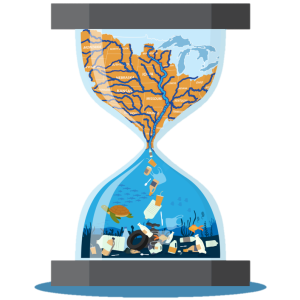
Plastic Pollution, Gulf Hypoxia, and Water Quality
November 11, 2026St Charles, MO
Jennifer Wendt from MidAmerica Clean Future guides us through understanding regional water quality challenges.
See Event