
Big Muddy Speaker Series presents:
The Cottonwood Conundrum and the Flood of 2011


Missouri River floodplain cottonwood forests are a crucial component of the river valley ecosystem along the length of the Missouri River. These forests support diverse communities of woodland wildlife and migratory birds. The conundrum with cottonwoods is that they require flooding to spread seeds and deposit new sediments for seeds to sprout in. River regulation from dams, channelization, and other alterations to the Missouri River channel have greatly impacted cottonwood forests and the hydrologic processes that historically helped to sustain them.
The flood of 2011 occurred after 6+ decades of flow regulation. Mark Dixon, PhD, will discuss the effects of the flood and the degree to which the flood may have contributed to restoration and regeneration of cottonwood forests, especially in upper reaches of the river. Overall he will provide an overview of the "cottonwood conundrum", the effects of the 2011 flood, and lessons learned about the challenges of cottonwood restoration on a large, regulated river.
Mark Dixon, PhD, is an Associate Professor at the Missouri River Institute at the University of South Dakota, Vermillion. His teaching and research covers large river riparian ecosystems and plant and avian ecology. He is currently on sabbatical doing research with the USGS River Studies Branch in Columbia.
Meet Your Presenter

Mark Dixon
, PhD, The Missouri River Institute
Mark Dixon, PhD, is an Associate Professor at the Missouri River Institute at the University of South Dakota, Vermillion. His teaching and research covers large river riparian ecosystems and plant and avian ecology. He is currently on sabbatical doing research with the USGS River Studies Branch in Columbia.
Related Presentations
Resources & Links
Dig in for more info on this topic:
- Missouri River Institute Homepage (USD)
- Research - "Dynamics of Plains Cottonwood Forests and Historical Landscape Change along Unchannelized Segments of the Missouri River" - Published 2012
- Research - "Forty Years of Vegetation Change on the Missouri River floodplain" - Published in BioScience Journal, 2012
- Research - "Status and Trend of Cottonwood Forest Along the Missouri River" - published 2010
- Research - "Projecting Long-term Landscape Change along the Missouri River: Implications for Cottonwood Forests and Songbird Populations" - published 2012.
- Article - "Land of the Lost - Missouri River Ecosystems responding to floods" - by Nick Hytrek, Sioux City Journal, June 8, 2013
- Impacts of the 2011 Flood on the Missouri River Channel - publication by Tim Cowman, Missouri River Institute. Also check out this great powerpoint by Tim Cowman on the subject.
The Big Muddy Speaker Series in Rocheport
is hosted by these wonderful partners.
- Missouri River Relief
- Friends of Big Muddy
- Columbia Fish & Wildlife Conservation Office (USFWS)
- Les Bourgeois Vineyards
- Big Muddy National Fish & Wildlife Refuge
Click here for a list of upcoming presentations»
Special thanks to Les Bourgeois Vineyards for giving us the opportunity to use their beautiful space overlooking the Missouri River. All speakers are presenting for free! Thank you all for sharing your knowledge with us!
The Big Muddy Speaker Series also takes place monthly in Kansas City and St. Charles.
The Big Muddy Speaker Series is partially funded by the Columbia Ecological Services Field Office (USFWS) and the Mo. Dept. of Conservation.
Upcoming Presentations

Leave No Trace Training on the Barge
October 14, 2026St. Louis, MO
Join us for a special Big Muddy Speaker Series on the Living Lands & Waters Barge where Perry Whitaker will lead us in a Leave No Trace Training.
See Event
Missouri River Relief: 25 Years on the Big Muddy
November 10, 2026Columbia, MO
Join us for a journey through time celebrating 25 years of Missouri River Relief's work on the Big Muddy.
See Event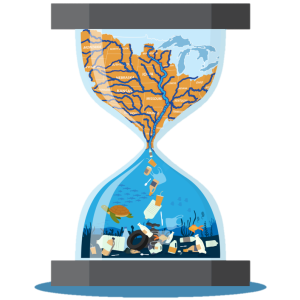
Plastic Pollution, Gulf Hypoxia, and Water Quality
November 11, 2026St Charles, MO
Jennifer Wendt from MidAmerica Clean Future guides us through understanding regional water quality challenges.
See Event