
Big Muddy Speaker Series presents:
Hazards of Spent Lead Ammunition to Wildlife and Humans


Last year, Roger Giles - who spends a lot of his time on the Missouri River - rescued a struggling bald eagle right out of the river on the banks of Eagle Bluffs Conservation Area. The bird was first suspected of suffering from lead poisoning. Testing showed that was not the case, but the event did reveal to many of us the fact that lead poisoning is a very common cause of sick and injured eagles. Raptor Rehabilitation Project officer Christa Moore said at the time, "They get it through the food they eat, lead shot," she said. "They will pick up a lot of lead in their system which is toxic to them in high quantities." Here's the article (with great video on Roger's boat) from KOMU-TV.
Recent research is revealing surprising levels of contamination in people and wildlife, especially birds, due to exposure or ingestion of lead shot or bullet fragments used in hunting and lead sinkers used for fishing. But there are alternatives out there that work and new regulations are working to reduce lead contamination from recreational activities.
John Weber, a environmental contaminants specialist with the U.S. Fish & Wildlife Service Columbia Ecological Services lab, will describe the fate of lead (Pb) based ammunition in the environment and its potentially toxic impacts to wildlife and humans following ingestion. John will address the scope and history of the problem as well as progress that has been made limiting Pb in the environment. Additionally, John will discuss effective alternatives to Pb-containing ammunition readily available in the local marketplace.

This rescued swan was contaminated by lead bullet fragments. Clinical signs of Pb poisoning in wild birds include weight loss, stained feces, wing droop, weakness, and seeking cover (Photo Credit USGS)
Meet Your Presenter

John Weber
, Environmental Contaminants Specialist
John Weber was born and raised in Cole County, MO near the Moreau River. After attending college at Furman University in Greenville, SC, John spent a year volunteering for Habitat for Humanity in the mountains of North Carolina and then took a job as the stewardship coordinator for the Columbia Land Trust in Portland, OR. Following the birth of his first daughter, John accepted a position with the Missouri Department of Natural Resources in Jefferson City, Missouri as a Superfund state project manager focusing on the impacts of mining related contamination on the environment. In 2007, he moved to the U.S. Fish and Wildlife Service as an environmental contaminants specialist where he continues to research the impacts of heavy metals on the natural resources of the United States. John enjoys hiking, camping, deer hunting, and amateur forestry and has a M.S. degree from the University of Missouri in Environmental Science.
Related Presentations
Resources & Links
Dig deeper into this month's topic.
- US Fish & Wildlife Service - Upper Midwest Environmental Contaminants Program
- "Columbia Man Rescues Drowning Eagle" - Sept. 24, 2013, KOMU-TV
- Report - "Lead Poisoning in Wild Birds" - USGS
- Research a variety of studies related to lead's effects on wildlife at the USGS National Wildlife Health Center.
- Links to even more indepth studies at the Peregrine Fund.
- USGS lead poisoning photo gallery.
- Tips on lead free hunting at huntingwithnolead.org
- Raptor Rehabilitation Project, Columbia, MO
The Big Muddy Speaker Series in Rocheport
is hosted by these wonderful partners.
- Missouri River Relief
- Friends of Big Muddy
- Columbia Fish & Wildlife Conservation Office (USFWS)
- Les Bourgeois Vineyards
- Big Muddy National Fish & Wildlife Refuge
Special thanks to Les Bourgeois Vineyards for giving us the opportunity to use their beautiful space overlooking the Missouri River. All speakers are presenting for free! Thank you all for sharing your knowledge with us! Click here for a list of upcoming presentations» The Big Muddy Speaker Series also takes place monthly in Kansas City and St. Charles.
The Big Muddy Speaker Series is partially funded by the Columbia Ecological Services Field Office (USFWS) and the Mo. Dept. of Conservation.
Upcoming Presentations

Missouri River Relief: 25 Years on the Big Muddy
November 10, 2026Columbia, MO
Join us for a journey through time celebrating 25 years of Missouri River Relief's work on the Big Muddy.
See Event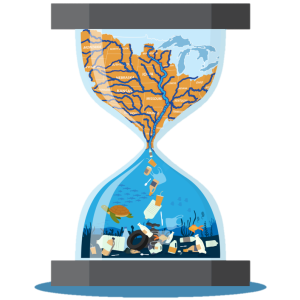
Plastic Pollution, Gulf Hypoxia, and Water Quality
November 11, 2026St Charles, MO
Jennifer Wendt from MidAmerica Clean Future guides us through understanding regional water quality challenges.
See Event