
Big Muddy Speaker Series presents:
FarmVille 3.0: Measuring the success of integrated conservation practices in Northern Missouri


Presentation by Donald H. Wilkison, U.S. Geological Survey
This presentation was originally given on March 31, 2015 at Westport Coffeehouse Theater – 4010 Pennsylvania Ave. Kansas City, MO.
Since 2010, the USGS, in cooperation with the Missouri Department of Natural Resources, has been monitoring stream water quality in the Lower Grand River Basin. Previous work demonstrated that substantial quantities of sediment and nutrients were exported from the basin each year and that these contaminants ultimately contributed to Gulf of Mexico hypoxia. Simultaneous with the monitoring effort, and in attempt to reduce deleterious effects on stream water quality, farmers in the Lower Grand River Basin have been encouraged to implement integrated conservation practices. This talk will focus on approaches to understanding how such conservation programs may affect water-quality, illustrate approaches for determining long-term trends in water quality, and explore how the lingering effects of drought may challenge assumptions about conservation effectiveness.

Meet Your Presenter

Donald H. Wilkison
, Scientist Emeritus
Donald H. Wilkison is a Scientist Emeritus with U.S. Geological Survey in the Kansas City office of the Missouri Water Science Center. Mr. Wilkison, a registered geologist in the State of Missouri, earned his M.S. in Urban Environmental Geology from the University of Missouri-Kansas City and is a long-time resident of Kansas City's urban core. Mr. Wilkison's work with the USGS centered on the goal of providing a better understanding of the influence of human activities on water quality in both rural and urban settings. He has been the principal investigator on studies on the occurrence and distribution of pesticides in ground water in Missouri, the fate and transport of agricultural fertilizers through the hydrologic cycle, and the occurrence, transport, fate and effects of nutrients, organic wastewater contaminants, pharmaceutical compounds, and bacteria in surface waters of the Kansas City metropolitan area.
Related Presentations
Resources & Links
Dig deeper for more info.
- Article - "Dead zone pollutant grows despite decades of work. But who’s the culprit?" - Environmental Health News, by Sara Shipley Hiles, July 9, 2012
- Our Missouri Waters - Lower Grand River Initiative (Mo. Dept. of Natural Resources)
The Big Muddy Speakers Series in Kansas City
is hosted by these wonderful partners!
- Little Blue River Watershed Coalition
- Friends of Lakeside Nature Center
- Missouri River Relief
- Healthy Rivers Partnership
- Friends of Big Muddy
- Big Muddy National Fish & Wildlife Refuge
- Kansas City Digital Video
Thanks to all of our venue hosts for making this possible! Click here for a list of upcoming presentations» The Big Muddy Speaker Series is also held monthly in Rocheport and St. Charles.
Recordings of Presentations
Kansas City Digital Video has been recording Big Muddy Speaker Series presentations. These are available on their website at this link. Some contain synchronized powerpoint presentations. We will be posting these to the archived presentation pages on bigmuddyspeakers.org. Thanks Micheal Morgan and crew for putting this important archive online! The Big Muddy Speaker Series is partially funded by the Columbia Ecological Services Field Office (USFWS) and the Mo. Dept. of Conservation.
Upcoming Presentations

Leave No Trace Training on the Barge
October 14, 2026St. Louis, MO
Join us for a special Big Muddy Speaker Series on the Living Lands & Waters Barge where Perry Whitaker will lead us in a Leave No Trace Training.
See Event
Missouri River Relief: 25 Years on the Big Muddy
November 10, 2026Columbia, MO
Join us for a journey through time celebrating 25 years of Missouri River Relief's work on the Big Muddy.
See Event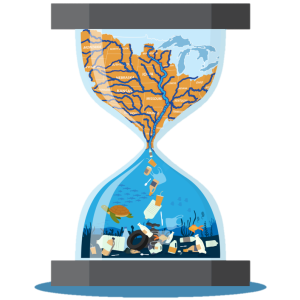
Plastic Pollution, Gulf Hypoxia, and Water Quality
November 11, 2026St Charles, MO
Jennifer Wendt from MidAmerica Clean Future guides us through understanding regional water quality challenges.
See Event